


If you’ve ever eaten Haitian food and wondered how everything on the plate tastes so layered, herby, and deeply savory, the secret is epis. This Haitian epis recipe is a blended green seasoning that forms the base of so many dishes.
Once you make a batch, you’ll understand why Haitian cooks always keep a jar in the fridge. Think of it as the foundation of almost every Haitian stew, soup, rice dish, and protein.
It’s not a single spice or a store-bought blend. It’s vibrant, punchy, and aromatic in a way that dried seasoning just can’t match. And the best part is that it takes about ten minutes to make and lasts for weeks.
In this post, you’ll learn what Haitian epis is, why it’s the foundation of so many dishes, and how to make an authentic Haitian epis recipe at home with simple ingredients.
Let’s break down what goes into it and how to use it so you can start building that same layered flavor in your own cooking.
What is Haitian Epis?
This Haitian epis recipe is a blended green paste made with fresh herbs like parsley and thyme, plenty of garlic, scallions, bell peppers, hot peppers, onion, and sour lime juice.
Everything gets blended with a little oil until it turns into a thick, fragrant marinade that smells like a whole garden in your kitchen.
But epis is not a finishing sauce or a condiment. It’s where Haitian cooking begins and the deep, layered flavor in food really comes from.
Every Haitian household has their own version. Some families add celery or cloves. Others go heavier on the heat or the citrus. The ingredients might shift a little, but the purpose stays the same.
You’re not just seasoning the food. You’re building the flavor base for the entire dish.
Once you make it, you’ll start finding reasons to use it in things that have absolutely nothing to do with Haitian cooking. It’s just that good.
What does Epis mean in Haitian?
The word “epis” comes from the French word “épices,” which simply means spices. It is also a linguistic shorthand for “the base.”
But calling it a spice blend is a little misleading. In Haiti, epis specifically refers to this fresh herb and pepper paste—not a dry seasoning mix.
The name comes from French influence, which shaped a lot of Haitian Creole vocabulary. But the way epis is actually made and used is rooted much more deeply in African and Caribbean cooking traditions.
So while the word might sound a little fancy or European, the technique itself comes from the way Haitian cooks built flavor with what was available: fresh herbs, aromatics, and peppers blended together to form the base of a dish.
Is Epis the Same as Sofrito?
They are cousins, not twins. The ingredient lists, textures, and flavor profiles are different enough that swapping one for the other will change the dish.
Sofrito, depending on the region, might include tomatoes, cilantro, aji dulce/habanero pepper, or annatto. Haitian epis skips the tomatoes completely and leans more into fresh parsley, thyme, scallions, and lime juice.
Texture-wise, epis is usually blended smoother and a little thicker. It’s almost always pureed into a paste.
That makes it easier to store, easier to measure, and easier to cook in oil without burning the little bits.
Is Haitian Epis the Same as Green Seasoning?
Close, but not identical. Green seasoning is a Caribbean staple, especially in Trinidad, Barbados, and Jamaica. Like epis, it’s a fresh herb paste made with scallions, garlic, peppers, and plenty of green herbs.
The difference really comes down to the herbs and the overall flavor. Green seasoning often includes cilantro, culantro, and sometimes basil or chives, depending on who’s making it.
Haitian epis usually sticks with parsley and thyme, which gives it a more earthy, slightly woodsy flavor compared to the brighter, citrusy punch you get from cilantro-heavy green seasoning.
Haitian Epis Recipe Ingredients
Every ingredient in this Haitian epis recipe plays an important role in building the layered flavor Haitian cooking is known for.
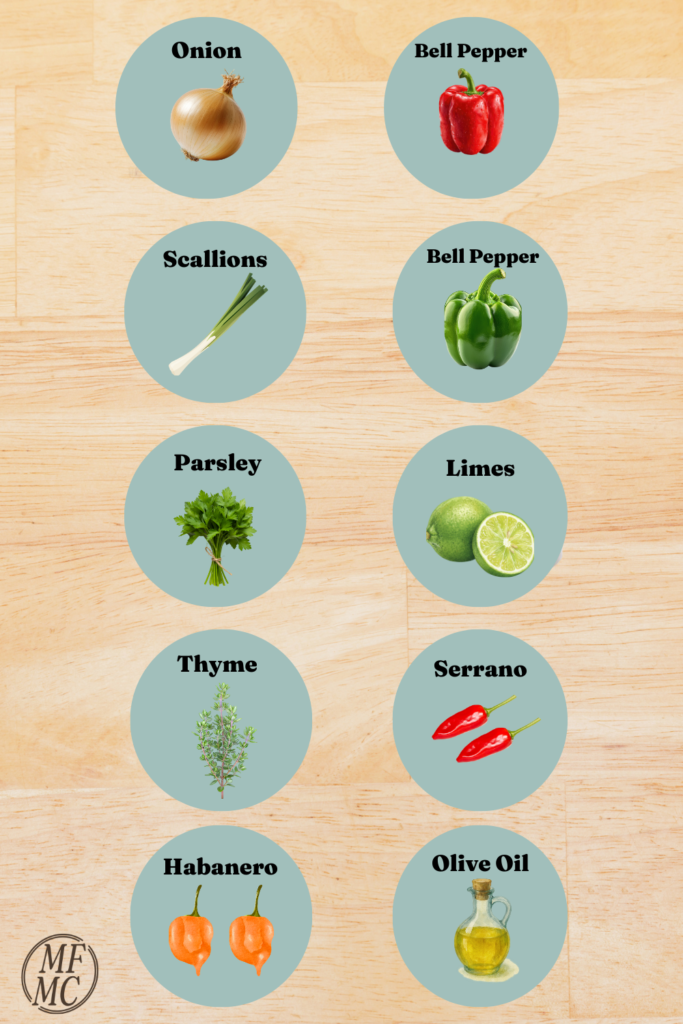
Onion (yellow or white, 1 whole)
This is where the base sweetness and savory depth come from. Yellow onions give a slightly deeper flavor, while white onions taste a little sharper and cleaner. Either one works. Red onions are not ideal here—they’re a bit too sweet and mild for epis.
Scallions (1 bunch)
Scallions bring that fresh, grassy onion flavor that regular onions can’t replicate. They also help create that signature green color and balance the richness of the garlic. I personally like to only use the green to light green part, but feel free to add the white as well!
Garlic (1 full head)
That’s usually about 10–12 cloves. Don’t be shy here. Garlic is what gives epis that deep, savory backbone instead of just tasting green and peppery. Fresh garlic works best here. It gives epis that deep, savory backbone instead of just tasting green and peppery.
Bell peppers (1 red, 1 green, 1 orange or yellow)
Using a mix of colors actually matters. Red peppers add sweetness, green peppers bring a slightly grassy note, and yellow or orange peppers fall somewhere in the middle. Together they create a more balanced pepper flavor. Remove the seeds and roughly chop before blending.
Habanero peppers (2 small)
These bring a fruity, floral heat. If you want to tone the heat down, remove the seeds and membranes but keep the flesh because the flavor is worth it. Scotch bonnets work too if you can find them.
Serrano peppers (2 small)
Serranos add a sharper, more direct heat that balances the fruitiness of the habaneros. You can remove the seeds if you want less spice, but leaving them in is traditional and gives the epis a proper kick.
Limes (2–3, juiced)
Fresh lime juice is non-negotiable. It brightens the whole paste, balances the garlic and oil, and gives epis that fresh pop of acidity. Juice them right before blending.
Parsley (1 bunch)
This is the main herb in epis. It’s earthy, slightly peppery, and fresh without overpowering the rest of the ingredients. Use flat-leaf parsley if you can. The stems are completely fine—they blend right in.
Thyme (1 bunch)
Fresh thyme adds that woody, aromatic flavor that’s deeply tied to Haitian cooking. If you can find Caribbean thyme, even better—it’s stronger and more fragrant. Dried thyme can work in a pinch, but fresh really makes a difference.
Olive or avocado oil (about ¼ cup)
The oil helps everything blend smoothly and keeps the paste from drying out. It also helps the aromatics cook properly when you start your dish. Olive oil adds a little fruitiness, while avocado oil is more neutral.
Most of these ingredients are easy to find at a regular grocery store. If you have access to a Caribbean or Latin market, you’ll probably find the peppers and herbs even more easily. Look for bright peppers and herbs that smell strong when you crush a leaf—those will give you the best flavor.
Optional ingredients (to make it your own)
This is where you’ll see a lot of variation from household to household. Some people add things like chicken bouillon, sour orange, adobo seasoning, a few cloves, or even celery to shift the flavor a bit and make the epis their own.
Just keep in mind that bouillon and adobo both add quite a bit of salt, so if you’re trying to be mindful of sodium, you may want to skip them in the epis itself and season the final dish instead. The beauty of epis is that the fresh herbs and aromatics already bring a ton of flavor on their own.
Why This Recipe Works
This Haitian epis recipe hits the perfect balance between heat, herbs, acid, and aromatics. The ratios are balanced so you can use it as a marinade, a cooking base, or even a small finishing spoonful without it overpowering the dish.
It’s flavorful and bold, but not aggressive – which is exactly what a well-made Haitian epis recipe should be.
RD Tip:
The freshness of your herbs and the quality of the oil you use really matter here. Fresh, fragrant herbs will give you a brighter flavor, and a good-quality oil helps the epis last longer in the fridge while keeping the flavors tasting clean and vibrant.
What does Haitian Epis Taste Like?
Haitian epis tastes bright, garlicky, herbaceous, and slightly spicy. The fresh herbs and lime create a bold flavor that’s deeper and fresher than any dried seasoning blend.
Equipment You Will Need
You really only need two things to make epis: something to blend it in and something to store it in.
Food Processor or Blender
A regular blender or food processor works just fine; I personally use my food processor to get the texture I’m looking for. If your blender struggles a bit, add a splash more oil or lime juice to help everything move.
I don’t recommend using an immersion blender, you’ll end up wearing half the epis instead of blending it.
If your food processor is small or not very powerful, you can blend the ingredients in multiple batches. Just mix them together in a bowl before storing so the flavor stays consistent.
Glass jar
A 32-oz mason jar plus a 16-oz mason jar works perfectly for storing a batch of epis. Glass is better than plastic because the herbs and peppers can stain, and an airtight seal helps keep everything fresh. Just make sure the jars are clean and completely dry before filling them.
The 32-oz jar alone can last about 1–2 months, depending on how often you’re cooking. The extra 16-oz jar is perfect for sharing with a friend or family member—because once people know you’re making epis, they’ll start lining up for a jar. Trust me. 😅
Rubber Spatula
You’ll want this to scrape down the sides of the food processor and get every last bit into your jar. Don’t skip this step, otherwise a good portion of your epis will stay stuck in the blender. Not the greatest if you’re trying to make a smoothie next!
Step-By-Step Instructions
Making this Haitian epis recipe is fast, a little messy, and honestly very satisfying
1. Prep your ingredients.
Peel the onion and garlic. Trim the scallions and roughly chop them in half. Seed and chop the bell peppers. If you’re removing the seeds from the hot peppers, do that now!
Juice your limes and rinse the parsley and thyme. You don’t need to dry the herbs— a little water is completely fine. The goal is just to get everything roughly chopped so your blender doesn’t have to work overtime.
2. Load the blender.
Start with the liquid ingredients first: the lime juice and oil. This helps the blades catch and keeps everything from getting stuck at the top.
Then add the aromatics – onion, scallions, and garlic. Next go in the peppers: bell peppers, habanero, and serrano.
Finally, pile in the herbs. Blend in two batches if needed. No reason to burn out your food processor.
3. Blend until smooth.
Start on low just to break everything down, then turn it up to high. You’re looking for a thick, smoother paste without big chunks. This usually takes about 1–2 minutes depending on your food processor.
Stop halfway to scrape down the sides so everything blends evenly. If it’s too thick to move, add a little more oil or lime juice. Skip the water – it dilutes the flavor and shortens the shelf life.
4. Taste and adjust.
This is your moment to tweak things.
Too mild? Add another pepper. Need more acid? Squeeze in a little more lime. Want more depth? A pinch of salt or a small amount of bouillon can help.
The final flavor should taste bright, garlicky, herby, and just a little spicy—not flat.
5. Transfer to a jar.
Use a rubber spatula to scrape every last bit into your jar. Press it down slightly to remove air pockets, then pour a thin layer of oil on top. This helps prevent oxidation and keeps the epis from turning brown. Seal the jar tightly.
And that’s it. You just made one of the most important flavor bases in Haitian cooking
How to Use This Haitian Epis Recipe
Once you make this Haitian epis recipe, you’ll start reaching for it constantly. A spoonful instantly adds depth, heat, and that fresh herb flavor to whatever you’re cooking.
Use it as a marinade.
Rub a few tablespoons onto chicken, fish, shrimp, pork, or steak and let it sit for at least 30 minutes (or overnight). The garlic, herbs, and lime soak into the protein and build flavor before it even hits the pan. I usually do 1 heaping tablespoon for every pound of meat.
Start your cooking with it.
In many Haitian dishes, epis is the first thing that goes into the pot. Heat a little oil, add a spoonful or two, and let it cook for a minute so the aromatics bloom before adding your rice, beans, stew ingredients, or protein.
Use it as the base for braised dishes.
Bloom a few tablespoons of epis in oil, brown chicken thighs or pork shoulder, then add stock and other ingredients and let everything simmer. The epis infuses the braising liquid and turns it into something deeply savory and complex.
Stir it into beans or rice while they simmer.
Add a spoonful to black beans or red beans as they cook. The herbs and peppers melt into the starchy bean liquid and create a thick, flavorful pot that tastes like it has been simmering all day.
….And More!
Once you have a jar in your fridge, you’ll start finding excuses to use it everywhere—from roasted vegetables to scrambled eggs to quick marinades. It’s one of those ingredients that makes almost anything taste better.
How to Store Epis
If you store this Haitian epis recipe properly, it will keep for weeks in the fridge and months in the freezer.
In the fridge: Store it in a glass jar with a tight lid. Stored this way, epis will usually last about 3–4 weeks (sometimes longer if your fridge runs very cold). If you ever see mold or it smells off, toss it. Not worth the risk.
In the freezer: Portion the epis into ice cube trays or small containers. Once frozen, transfer the cubes to a freezer bag. Each cube is roughly about a tablespoon, which makes it really easy to grab exactly what you need without thawing the whole batch. Frozen epis keeps well for about 3–4 months.
A quick storage tip: Try not to store epis in plastic for long periods. The peppers and herbs can stain the container and the flavors can linger. Glass jars work much better and are easier to clean.
When you pull epis from the fridge, give it a quick stir before using it. The oil and the paste can separate a little, which is totally normal. If you’re using frozen cubes, you can drop them straight into a hot pan—they’ll melt down and bloom in the oil just like fresh epis.
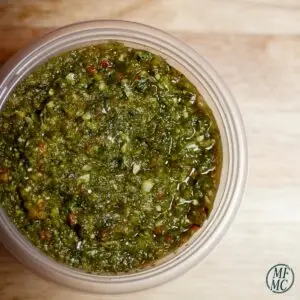
Haitian Epis
Equipment
- Food Processor (can use a Blender if you don't have it )
- Glass Mason Jar (32 oz + 16 oz are the perfect)
- Rubber spatula
Ingredients
- 1 whole Onion (Yellow or White, preferably)
- 1/4 cup Olive oil (Can substitute for Avocado oil)
- 1 bunch Scallions
- 1 full head Garlic
- 2-3 whole Bell Pepper (Green + Red, Orange, or Yellow)
- 2 whole Habanero Pepper
- 1-2 whole Serrano Pepper
- 2-3 whole, juiced Lime
- 1 bunch Parsley
- 1 bunch Thyme
Instructions
- Wash and prep vegetables. Peel the onion and garlic, roughly chop and seed the peppers. If you would not like your epis to be too hot, remove the seeds from the habanero and serrano peppers.
- With a food processor, add the lime juice and olive oil. Then layer the onions and garlic and bell peppers. Blend if you have a smaller food processor.
- Layer the habanero and serrano peppers. Lastly, add the parsely and thyme. Blend for 1-2 minutes, or until you get a consistent paste.
- With a rubber spatula, add mixture to a glass mason jar. Keep in the fridge for 3-4 weeks.
The Heart of Haitian Cooking
Epis isn’t just a seasoning—it’s tradition, flavor, and a little bit of love in a jar. It’s the foundation of so many Haitian dishes and one of those ingredients that quietly transforms everything it touches.
Once you learn how to make this Haitian epis recipe, you’ll see why Haitian cooks keep a jar in the fridge at all times. Every batch can look a little different depending on what you have on hand or the flavor you’re going for. I like to experiment and add something slightly different with new batches just to see how the flavor shifts.
If you enjoy cooking with bold, fresh flavors like this, you’ll see epis show up in a lot of the recipes and meal ideas I share inside the Nourish Strong Method. If you want more culturally-inspired, flavor-forward meals that are simple to cook during a busy week, you can join theNourish Strong Method waitlist to be the first to know when it opens.